Skip to content

Vinyl & Laminate Flooring in Guelph

Vinyl & Laminate Flooring Installation in Guelph

Luxury vinyl plank and laminate are the most popular floors we install in Guelph, and the ones most often installed badly by others. Guelph Flooring Pros has fitted LVP flooring, SPC, WPC, sheet vinyl and laminate in basements, kitchens, rental units and offices for more than 15 years. They look simple because the boards click together, but most failures come from what happens before the first plank goes down.

We install for homeowners renovating a basement, landlords turning units over between tenants, and builders fitting out new homes. We also install product you have bought elsewhere, from any Guelph vinyl flooring retailer or big-box store, as long as it suits the room.

This page explains the differences between SPC, WPC, sheet vinyl and laminate, why subfloor flatness matters so much for floating floors, how to choose underlayment, and what vinyl and laminate flooring installation costs in Guelph. If you are still deciding between the two materials, our laminate vs vinyl comparison lays out the trade-offs in plain terms.
  • 15+ years
  • 1500+ jobs
  • WSIB covered
  • 2-year labour warranty
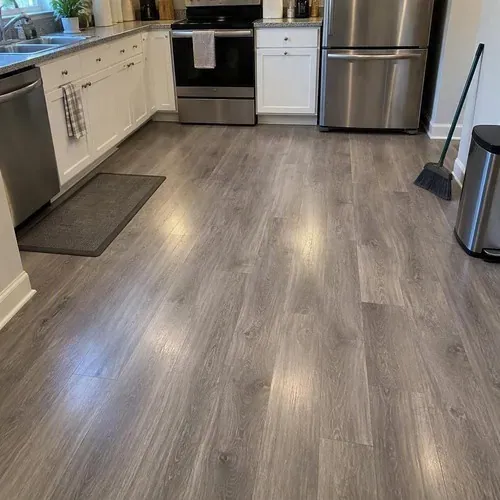
Finished gray vinyl plank floor in kitchen after vinyl and laminate flooring installation

1500+

floors completed

Most People Comparing Vinyl and Laminate Are Asking the Wrong Question

Buyers usually compare brands, colours and plank widths. Those matter, but the real deciding questions are how much water the room sees and what the subfloor is like.

If there is a chance of standing water, from a dishwasher leak, a wet mudroom or a basement slab, you want a waterproof vinyl core. If the room is dry and you have kids, pets or rolling chairs, laminate's harder surface may serve you better.

After that, the subfloor decides whether either floor will stay flat and tight. Get those two things right and almost any mid-range product will perform well.

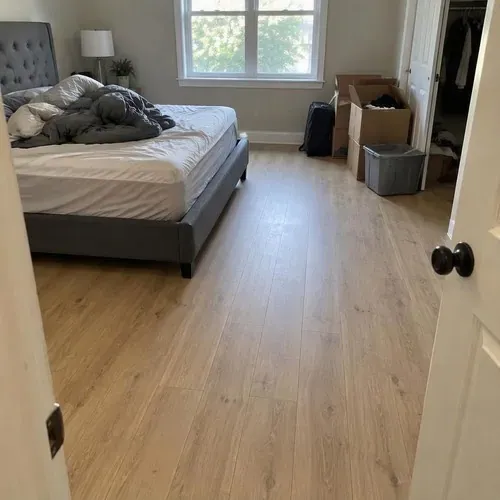
Finished light oak laminate in bedroom after vinyl and laminate flooring installation

Luxury Vinyl Plank, SPC and WPC Explained

Older click vinyl was thin and flexible, and it telegraphed every bump in the floor below. Today's rigid-core luxury vinyl plank is a different product, with a stiff core that bridges minor imperfections and keeps seams locked.

There are two main rigid cores, plus traditional glue-down products.

SPC: Stone Core, Hardest Wearing

Stone plastic composite cores are made mostly of limestone powder and PVC. They are dense, dimensionally stable and resist dents from furniture and appliances.

SPC is our usual recommendation for rentals, busy family kitchens, basements and light commercial spaces. It can feel harder and slightly louder underfoot, which a good underlay helps with.

WPC: Wood-Plastic Core, Softer Underfoot

Wood plastic composite cores are foamed, which makes them lighter, warmer and quieter to walk on. Many people prefer the feel in bedrooms and living rooms.

The trade-off is dent resistance. Heavy furniture legs and dropped pans can leave marks that SPC would shrug off.

Sheet Vinyl and Glue-Down Plank

Sheet vinyl comes in rolls up to 12 or 13 feet wide, so most bathrooms and laundry rooms can be done with no seams at all. That makes it very water-resistant and easy to clean.

Glue-down vinyl plank, also called dry-back, is thinner and bonded to the subfloor. It is the right answer for commercial spaces with rolling loads, and for rooms where floor height is limited.

Where Laminate Still Beats Vinyl

Laminate's top layer is a melamine wear surface that is harder than vinyl's, so it resists scratches from pets, grit and chair legs better. Good laminate also has deeper embossed texture that feels more like real wood.

At the same price point, laminate often looks more convincing. Many newer laminates also have water-resistant cores and sealed joints, which buy time if a spill is wiped up quickly.

It still does not belong in basements on concrete, bathrooms or anywhere water can sit. For main-floor living rooms, bedrooms and offices, it remains a strong choice.

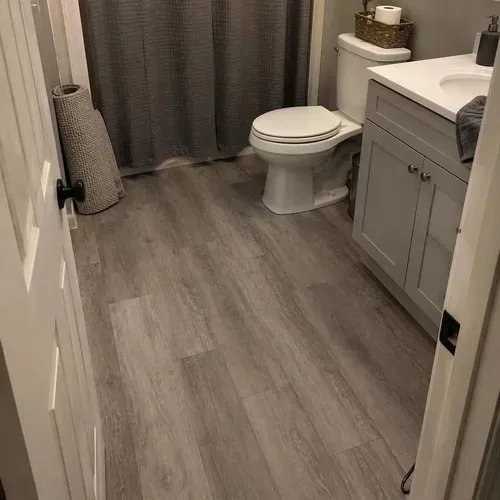
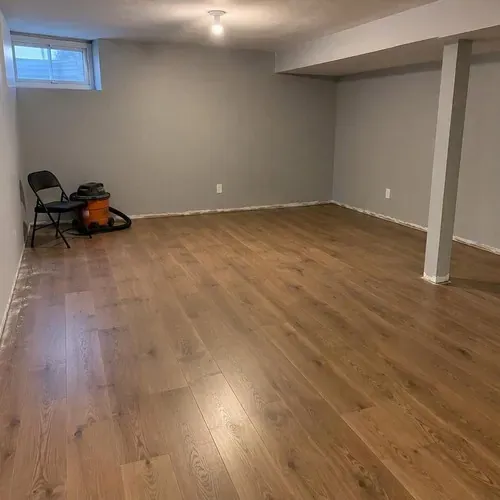
Finished luxury vinyl planks in basement bathroom after vinyl and laminate flooring installation

Subfloor Flatness Is Why Floating Floors Fail

A floating floor rests on the subfloor without fasteners. Wherever there is a dip, the planks flex every time someone steps there, and over time that flexing wears out the locking joints.

That is why cheap installs show clicking, bouncing spots and seams that open within a year. Most manufacturers require the subfloor to be flat within 3/16 inch over 10 feet, and their warranties are void if it isn't.

We check with a straightedge before quoting and include levelling in the price when it is needed. It is the step most "flooring installation near me" quotes quietly leave out.

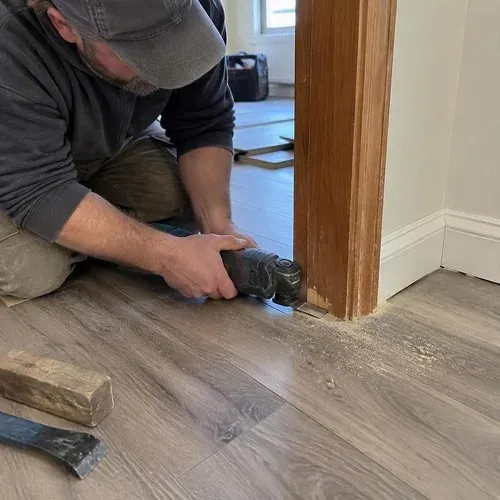
Laminate cut around door frame with oscillating tool during vinyl and laminate flooring installation

Underlay: Foam, Cork or Attached Pad

Many rigid-core planks come with an underlay pad already attached. In that case, adding a second underlay can make the floor too soft and void the warranty.

For products without a pad, we choose based on the room. Foam is inexpensive and adequate for most above-grade rooms. Cork adds warmth and noticeably reduces sound, and higher-density acoustic underlays are used where condo rules set a sound rating.

On concrete, we add a 6 mil polyethylene vapour barrier unless the product's attached pad already includes one. Underlayment for vinyl flooring is a small line on the quote, but it affects comfort and warranty more than most buyers expect.

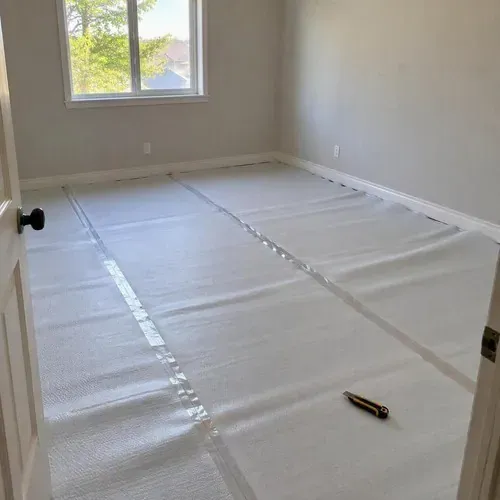
Foam underlayment with taped seams in bedroom during vinyl and laminate flooring installation

Our process

Our Vinyl and Laminate Installation Process

  1. 1

    Levelling and Patching the Subfloor

    We grind high spots, fill low areas with a cement-based patching compound, and use self-levelling underlayment over larger slab areas. Our target is the manufacturer's flatness tolerance, usually 3/16 inch over 10 feet.

    On wood subfloors, we also screw down loose panels to stop movement and squeaks under the new floor.

  2. 2

    Laying Out for Expansion Gaps

    Floating floors expand and contract with temperature and humidity. We leave the manufacturer's required gap at every wall, cabinet and fixed object, usually about 1/4 inch.

    On long runs, typically over 40 to 50 feet depending on the product, we add a T-moulding to let the floor move. Skipping this is why some floors buckle in the middle of summer.

  3. 3

    Cutting Around Door Casings and Transitions

    Instead of cutting planks to wrap around door trim, we undercut the casing with a jamb saw and slide the plank underneath. It leaves a clean edge with no caulk and no visible gap.

    Transitions at doorways and between floor types are set to the right height so nobody trips, and baseboard or quarter-round covers the expansion gap without pinning the floor down.

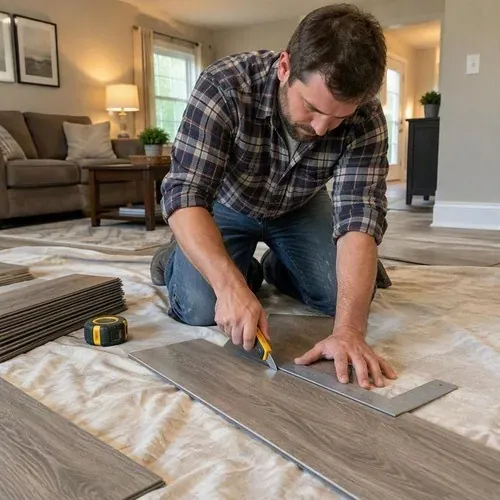
Installer cutting vinyl plank with utility knife during vinyl and laminate flooring installation
Every step on your written quote

What Vinyl and Laminate Installation Costs in Guelph

Typical 2026 Guelph prices, including material and labour for a straight lay:

Product Installed cost per sq ft
Laminate $4.50 to $8
Rigid-core vinyl plank (SPC or WPC) $5 to $10
Glue-down vinyl plank $5.50 to $10
Sheet vinyl $4 to $8

Labour alone typically runs $2 to $3.50 per square foot for laminate and $2.25 to $4 for vinyl plank. Subfloor levelling adds $2 to $6 per square foot where needed, and removal of old flooring is priced by type.

FAQ

Vinyl and Laminate Questions

Is it cheaper to install laminate or vinyl?

Labour is similar for both because they install the same way. Material is where they differ: entry laminate is often slightly cheaper than rigid-core vinyl, while premium products overlap. The bigger cost difference is usually subfloor prep, not the plank.

How much does Home Depot charge for vinyl floor installation?

Big-box stores, including Home Depot, run installation programs through contracted installers and advertise per-square-foot labour rates. When comparing, check what the quote includes: old floor removal, subfloor levelling, furniture moving, transitions, baseboard and stairs are often separate charges. Compare itemised totals, not headline rates.

Can vinyl plank go in a basement?

Yes, and it is usually the best choice. A rigid-core SPC or WPC plank with a vapour barrier handles slab moisture far better than laminate or wood. Our best flooring for basements guide covers the options in order.

Will vinyl plank dent under heavy furniture?

It can, especially WPC and thinner products. SPC resists denting much better. Use wide felt pads or furniture cups under heavy pieces, and avoid rubber-backed mats that can discolour vinyl over time.

Free written quote

Get a Vinyl or Laminate Quote

We will quote both options side by side, including any levelling your subfloor needs. Call 226-790-3755 or request a free quote.

  1. 1

    Call or send the form

    Tell us the rooms, the floor you want and your timeline.

  2. 2

    Free on-site measure

    We measure, check the subfloor and take moisture readings.

  3. 3

    Itemised written quote

    Every line listed. No deposit needed to receive it.

Open Monday to Saturday 7am to 9pm, Sunday 9am to 5pm.

Call 226-790-3755Free Quote