Skip to content

Flooring guide

The Best Flooring for Basements in Ontario

Basement flooring fails more often than flooring anywhere else in the house. Laminate swells, carpet smells musty, hardwood cups and vinyl adhesive lets go. In almost every case, the problem started with a choice that didn't account for what an Ontario basement actually does through the year.

This guide is written by Guelph Flooring Pros, a flooring installation contractor in Guelph, Ontario. We have finished basements across Wellington County and Waterloo Region for more than 15 years and have removed plenty of failed basement floors installed by others. What follows is what we have learned about which floors survive below grade and which don't.

We rank the best flooring for basements in order, explain the slab moisture problem that causes most failures, show you a simple test you can do yourself before choosing anything and cover the subfloor, vapour barrier and winter comfort questions most guides skip. Much of the online advice about basement flooring is written for warmer, drier US climates. This one is written for Ontario.
  • 15+ years
  • 1500+ jobs
  • WSIB covered
  • 2-year labour warranty
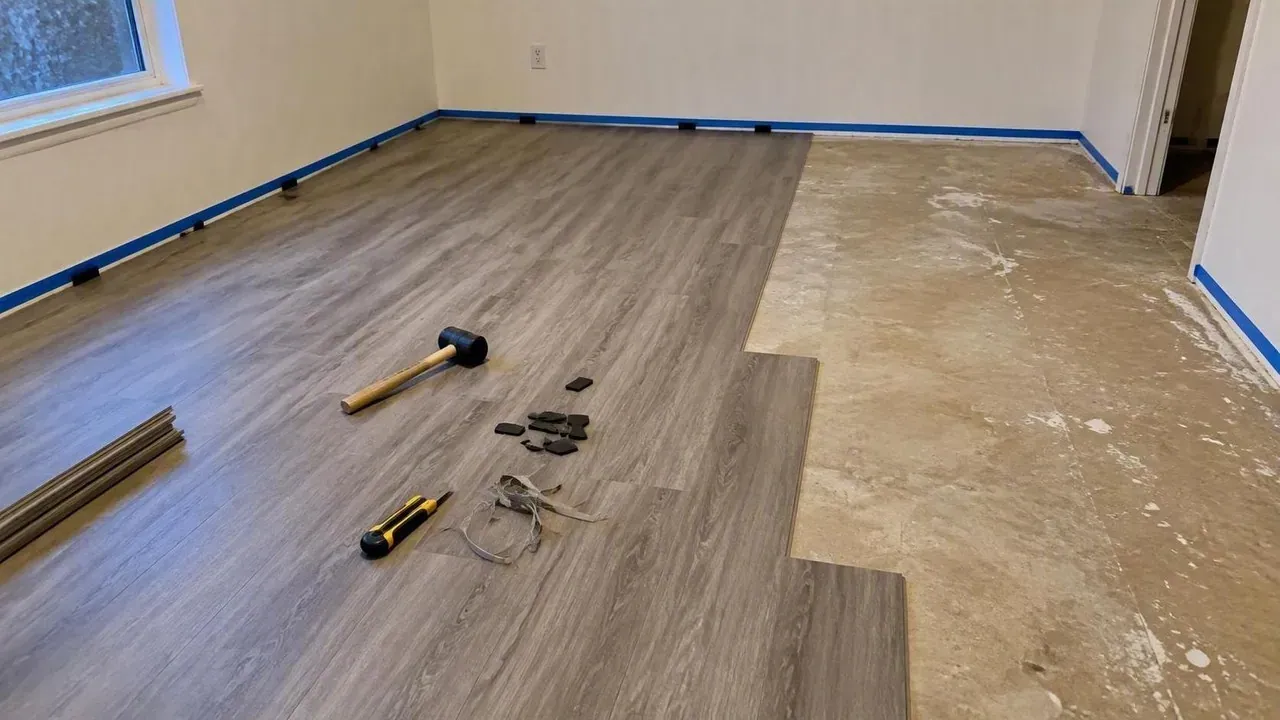
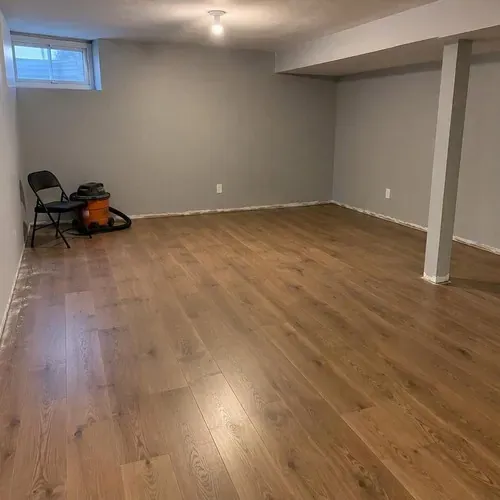
Engineered floor in basement before baseboards, ahead of engineered hardwood installation

1500+

floors completed

Basements Fail From Below, Not Above

Most people worry about flooding when they choose basement flooring. Floods matter, but the everyday problem is quieter: water vapour moving up through the concrete slab.

Concrete is porous. Moisture from the soil beneath travels up through it constantly, especially in older homes built without a plastic vapour barrier under the slab. You can't see it, but it collects under anything that traps it.

Laminate and solid wood absorb that moisture and swell. Carpet pad holds it and grows mould, and glue-down adhesives soften and release. The floors that survive are the ones that either don't care about moisture or have a barrier that keeps it out.

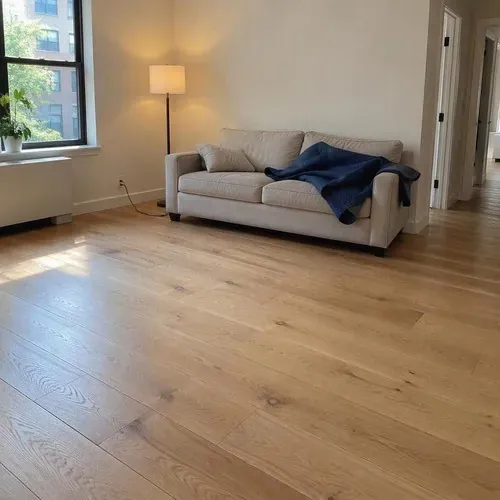
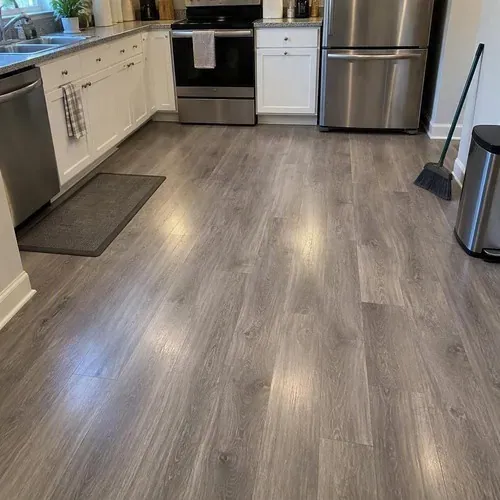
Finished gray vinyl plank floor in kitchen after vinyl and laminate flooring installation

Test Your Slab Before You Choose Anything

You can do a simple moisture test yourself with a sheet of clear plastic and some tape. It's a version of the ASTM D4263 plastic sheet test that professionals use as a first check.

Tape an 18 by 18 inch square of clear polyethylene tightly to the bare slab on all four sides. Leave it for at least 16 hours, ideally 24 to 48.

Then lift it. If there is condensation or darkened concrete under the plastic, moisture is coming up through the slab.

If there is condensation on top of the plastic, the basement air is humid. Either result shapes what you should install, and a dry result is good news.

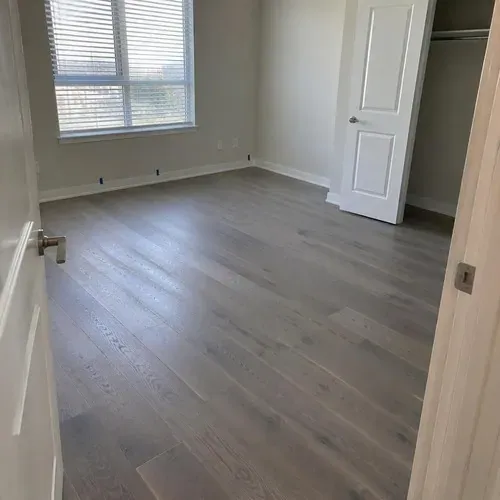
Finished gray-washed engineered floor in condo bedroom after engineered hardwood installation

Ranked: What Works in an Ontario Basement

Luxury Vinyl Plank with a Rigid Core

For most Ontario basements, rigid-core vinyl plank (SPC or WPC) is the right answer. It's fully waterproof, handles slab moisture with a vapour barrier underneath, floats over minor imperfections and looks like wood.

If a leak does happen, the planks can be lifted, dried and reinstalled. Installed costs typically run $5 to $10 per square foot. Our vinyl and laminate installation page covers how we lay it.

Tile

Porcelain tile is the most moisture-proof and durable basement floor. It won't swell, rot or grow mould, even in a flood.

The downside is that it's cold on a slab. That makes tile the ideal partner for electric radiant heat in basement bathrooms, gyms and rec rooms.

Engineered Hardwood

If you want real wood in a basement, engineered hardwood is the only sensible option. Its cross-ply core resists the humidity swings that ruin solid wood.

It needs a dry slab, confirmed by testing, and a proper moisture barrier, either a glue-down adhesive rated as a barrier or a floating installation over a vapour barrier and underlay.

Carpet and Carpet Tile

Carpet is the warmest and softest basement option, which is why it remains popular for rec rooms and bedrooms. It only works over a genuinely dry slab, with a pad that has a built-in moisture barrier.

Carpet tile is safer below grade, because wet tiles can be lifted and dried or replaced individually. Broadloom that gets soaked usually has to go.

What to Avoid Entirely

Solid hardwood. It cups and gaps with slab moisture and seasonal humidity swings.

Standard laminate. Its fibreboard core swells permanently when it gets wet.

Anything with an MDF or particleboard core, including some cheaper engineered and click products. Check the core before you buy.

Subfloor Panels, Vapour Barriers and Warmth

Between the slab and the finished floor, there are three common approaches.

Vapour barrier only

A 6 mil polyethylene sheet under floating vinyl or engineered wood stops moisture. It doesn't add warmth.

Dimpled subfloor panels

Panels with a plastic dimpled underside and an OSB or plywood top lift the floor slightly off the slab, allowing air to move underneath. They add some warmth and allow a wider range of flooring on top.

Insulated subfloor

Rigid foam insulation under plywood creates the warmest basement floor but raises the height by more than an inch. That affects stairs, doors and ceiling height. Most homeowners skip this layer and regret it the first January.

Basement Flooring and Ontario Winters

In an Ontario winter, the ground around and under a basement stays cold, and the slab can feel noticeably colder than the air in the room. Tile and thin vinyl directly on concrete feel cold underfoot.

In summer, the problem reverses. Warm, humid outdoor air enters the basement, meets the cool slab and walls, and can condense on them, raising humidity to 60 to 70 percent or more without a dehumidifier.

The best basement floors handle both extremes. That's why we recommend a dehumidifier in summer, a vapour barrier year-round and some form of insulation or radiant heat if you want the basement to feel comfortable in January.

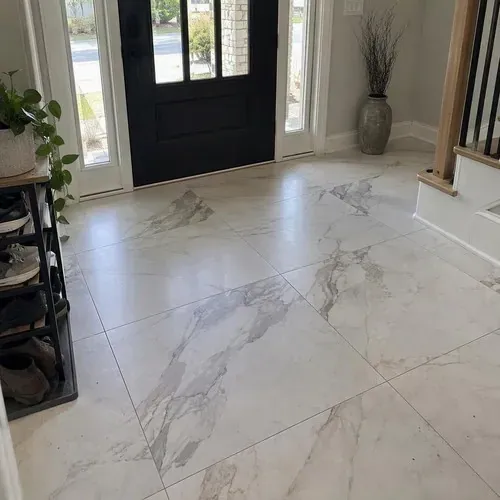
Finished marble-look porcelain tiles in entryway after ceramic and porcelain tile installation

FAQ

Basement Flooring Questions

What flooring is best for moisture-prone areas?

Porcelain tile and rigid-core vinyl plank are the most moisture-resistant floors available. Both handle spills, humidity and even minor flooding without permanent damage.

Can I put hardwood in a basement?

Engineered hardwood, yes, over a dry, tested slab with a proper moisture barrier. Solid hardwood, no. It will cup and gap with the moisture and humidity changes common in Ontario basements.

Do I need a subfloor over concrete?

Not always. Vinyl plank and tile can go directly on a flat, dry slab with the right barrier. A subfloor adds warmth and comfort, and it's worth considering for carpet, engineered wood or any basement used as living space.

For slabs that need levelling or moisture work before flooring, see our concrete floor installation page.

Free written quote

Get Your Basement Floor Quoted

We test your slab, recommend the right floor and quote the full job. Call 226-790-3755 or request a quote.

  1. 1

    Call or send the form

    Tell us the rooms, the floor you want and your timeline.

  2. 2

    Free on-site measure

    We measure, check the subfloor and take moisture readings.

  3. 3

    Itemised written quote

    Every line listed. No deposit needed to receive it.

Open Monday to Saturday 7am to 9pm, Sunday 9am to 5pm.

Call 226-790-3755Free Quote