Skip to content

Floor & Subfloor Repair in Guelph

Floor & Subfloor Repair in Guelph, All Floor Types

Guelph Flooring Pros repairs floors and subfloors of every type: hardwood, engineered, laminate, vinyl, tile, carpet, cork and concrete. We fix squeaks, soft spots, sagging, water damage, cupped boards, cracked tile, lifting seams and pet damage for homeowners, landlords and property managers across Guelph and the surrounding towns.

Repair is a different skill from installation. It starts with diagnosis, because what you see on the surface is usually a symptom of something underneath.

A squeak might be a loose fastener or a gap between a joist and the subfloor. A cracked tile might be a bad tile or a joist that flexes too much.

With more than 15 years and 1500 completed jobs, we have opened up a lot of floors, from diagonal plank subfloors in century homes to swollen OSB under failed laminate. That experience lets us find the cause quickly, fix it properly and often save a floor that another company would replace. This page covers what we repair, how we decide between repair and replacement, how we handle water damage and insurance claims, and what floor repair costs in Guelph.
  • 15+ years
  • 1500+ jobs
  • WSIB covered
  • 2-year labour warranty
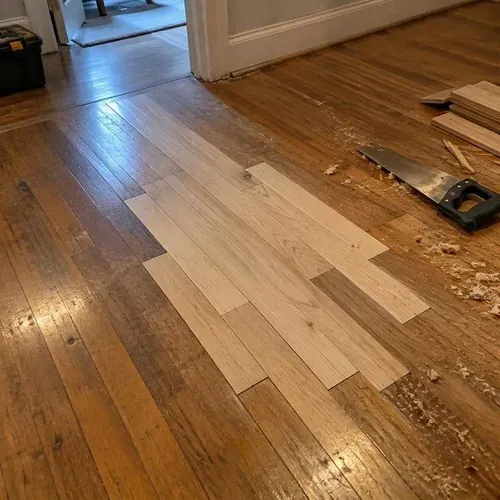
New boards woven into old hardwood floor during floor and subfloor repair

1500+

floors completed

A Soft Spot Is Rarely About the Floor You Can See

When a floor feels spongy, bounces or dips, most people assume the flooring has failed. Usually the flooring is fine. The problem is the layer below it, or the framing below that.

Common causes include a subfloor panel that has come loose from the joists, plywood softened by a slow leak, a joist that was cut for plumbing, or joists that were undersized for their span.

Putting new flooring over those problems just hides them for a while. We find and fix the cause first, then repair or replace the surface.

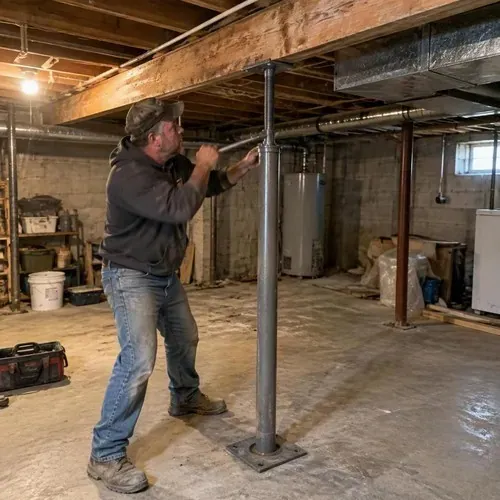
Contractor setting screw jack under basement beam during floor and subfloor repair

What We Repair

Squeaks and Movement

Squeaks come from two surfaces rubbing together: a board against a nail, a subfloor against a joist, or two boards against each other. We locate the source, often from the basement ceiling, and fix it with screws, shims, blocking or construction adhesive.

Our guide on how to fix squeaky floors explains the causes and DIY options in more detail.

Soft Spots and Sagging

Soft areas usually point to water-damaged subfloor, delaminated plywood or joists that are cracked, notched or overspanned. We cut out damaged subfloor and replace it with new plywood glued and screwed to the joists.

Sagging joists can be sistered with new lumber or supported with blocking or beams. Structural repairs like these may need a building permit, and we will tell you if yours does.

Water-Damaged and Cupped Hardwood

When hardwood gets wet from below, such as from a leak or a humid basement, the bottom of each board swells and the edges rise into a cup. It looks ruined, but it often isn't.

If the source is fixed and the floor is dried properly, cupping frequently flattens again over several weeks. We measure moisture throughout the process and only replace, sand or refinish once the wood has stabilised.

Cracked Tile and Failed Grout

Cracked tiles and grout lines are usually caused by subfloor deflection or substrate movement rather than the tile itself. We replace cracked tiles, regrout and, where the cause is structural, stiffen the floor before retiling.

Our tile installation page explains the substrate standards tile needs.

Lifting Vinyl, Laminate and Failed Seams

Floating floors lift or separate when they have no room to expand, when the subfloor isn't flat, or when moisture gets underneath. Glue-down vinyl lifts when adhesive fails, usually from slab moisture.

We find which of those caused it, correct it, and replace damaged planks. Many floors just need expansion gaps re-cut at walls and cabinets to settle back down.

Pet Damage, Burns and Deep Scratches

Pet urine stains, claw gouges, cigarette burns and deep scratches can often be repaired by replacing individual boards or planks. On hardwood, deep scratches may sand out during a refinish.

We try spot repair before anyone talks about a new floor.

Repair or Replace: How We Decide

We recommend repair when the damage is localised, the rest of the floor is sound and matching material is available. That covers most squeaks, small water leaks, pet stains and cracked tiles.

We recommend replacement when damage covers most of the floor, when a floating floor has been soaked through or when the flooring is at the end of its life anyway. We also recommend it if matching product is unavailable and the repair would stand out in a main room.

Sometimes replacement is right, and we will say so. When the numbers are close, we show you both prices and let you decide.

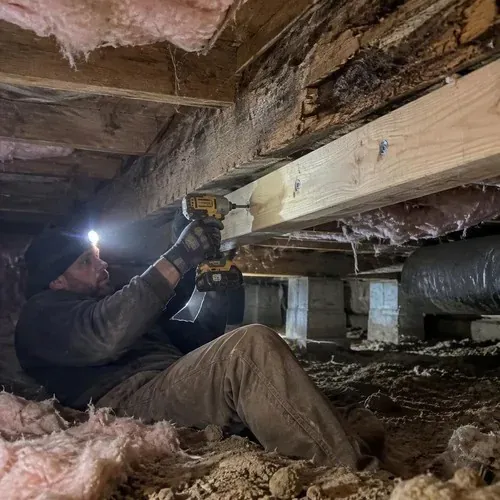
Handyman sistering floor joist in crawlspace during floor and subfloor repair

Water Damage and Insurance Claims

Water damage from leaks, burst pipes, appliance failures or basement flooding is one of the most common reasons we are called. When insurance is involved, documentation matters.

We document damage with photos and moisture readings at the first visit and track readings as the floor dries. We provide a written scope with itemised costs that adjusters can review, and we can work alongside restoration companies handling drying and remediation.

If you haven't called your insurer yet, do that first. Then call us to assess the floor.

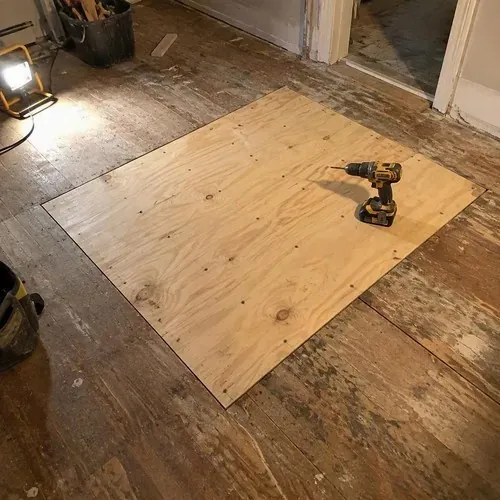
New plywood patch screwed into old subfloor during floor and subfloor repair

Matching Repairs Into an Existing Floor

The hardest part of any floor repair is making it disappear. A patch that doesn't match is almost as noticeable as the damage.

For hardwood, we weave new boards into the existing pattern so end joints stay staggered, rather than cutting a square patch. We match species, width and grade, and we source reclaimed boards for older floors. We then sand and finish the repaired area and feather it into the surrounding floor, or refinish the whole room.

For laminate, vinyl and tile, we check attic stock, leftover boxes and discontinued product sources. When the exact product is gone, we can move matching boards from a closet into the visible area and put the new ones out of sight.

Replaced laminate planks blended into old floor during floor and subfloor repair

What Floor Repairs Cost

Typical 2026 prices in Guelph:

Repair Typical cost
Squeak repair (per visit, several locations) $250 to $800
Hardwood board replacement, small area $400 to $1,200
Subfloor section replacement $600 to $2,500
Sistering a damaged joist $300 to $700 per joist
Replacing a few cracked tiles and regrouting $250 to $600
Laminate or vinyl plank replacement $300 to $900

Diagnosis can change the number. What looks like a single squeak sometimes turns out to be a loose section of subfloor, and we explain any change before doing the work.

FAQ

Floor Repair Questions

Can you fix a squeaky floor without pulling up the flooring?

Often, yes. If the basement ceiling is open, most squeaks can be fixed from below with shims, blocking or screws. From above, specialised screw kits can pull subfloor tight through carpet or hardwood with minimal visible damage.

Is water-damaged hardwood always a write-off?

No. Cupped hardwood often flattens once the moisture source is fixed and the floor dries, which can take several weeks. Sanding too early is the most common mistake, because boards then crown and dip when they finish drying.

Can you match boards in an older Guelph home?

Usually. Older homes often have narrow oak or maple strip, fir or pine. We source matching or reclaimed boards, weave them in and refinish so the repair blends with the original floor.

Do you work with insurance adjusters?

Yes. We provide moisture readings, photos and itemised scopes that adjusters can review, and we can coordinate with restoration companies.

Once the repair is done, a full sand and refinish is often the best way to blend it in. For badly sloped or uneven floors on concrete, see concrete floor installation for self-levelling.

Free written quote

Book a Floor Diagnosis Visit

We find the cause, explain your options and give you a written repair quote. Call 226-790-3755 or book online.

  1. 1

    Call or send the form

    Tell us the rooms, the floor you want and your timeline.

  2. 2

    Free on-site measure

    We measure, check the subfloor and take moisture readings.

  3. 3

    Itemised written quote

    Every line listed. No deposit needed to receive it.

Open Monday to Saturday 7am to 9pm, Sunday 9am to 5pm.

Call 226-790-3755Free Quote