Hardwood Sanding & Refinishing in Guelph
Hardwood Floor Sanding & Refinishing in Guelph
Guelph Flooring Pros sands and refinishes hardwood floors in homes, rentals and businesses across Guelph and the surrounding towns. We have been restoring wood floors for more than 15 years, and hardwood is one of our two core specialties. If your floors look dull, scratched, grey or orange, there is a good chance they can be brought back rather than ripped out.
Guelph has a lot of hardwood worth saving. Houses in the Ward, Exhibition Park and St. George's Park often have original oak or maple strip flooring from the early 1900s, sometimes hiding under carpet.
Homes built from the 1970s onward frequently have red oak that was finished once and never touched again.
This page explains how hardwood floor sanding and refinishing works, how many times a floor can be sanded, how we keep dust under control and what it costs in Guelph. It also covers honestly when refinishing is not the right answer, because sometimes replacement is.
- 15+ years
- 1500+ jobs
- WSIB covered
- 2-year labour warranty
1500+
floors completed
Your Floors Are Probably Not Worn Out, Just Worn Down
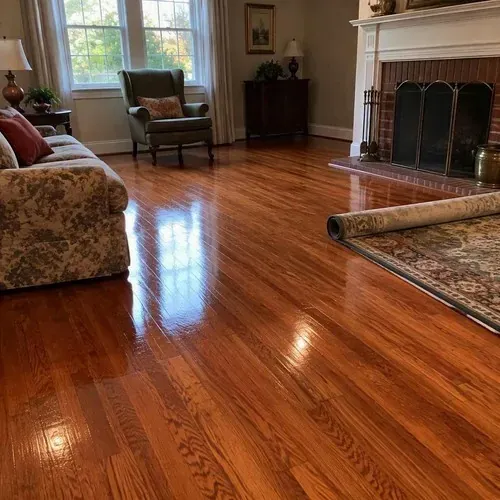
Most tired floors are not damaged wood. They are damaged finish. The polyurethane on top has worn through in traffic lanes, scratched in the kitchen and yellowed with age.
Under that layer, the wood itself is usually fine. A full sand removes the old finish and a hair of wood, exposing fresh timber that looks almost new once it is recoated.
That is why refinishing is one of the best-value jobs in a house. It usually costs a third or less of new flooring and takes days, not weeks.
Refinishing vs Replacing: The Honest Comparison
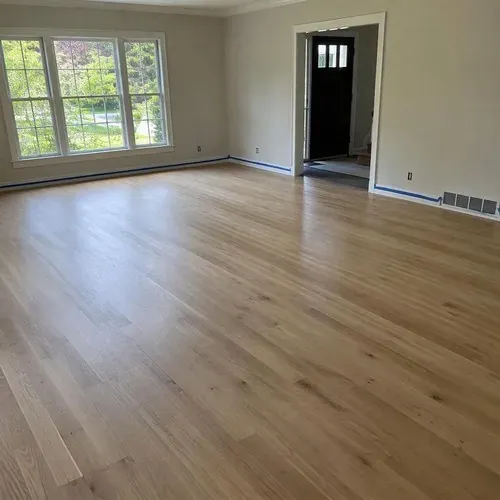
Refinishing is the better call when the boards are solid, reasonably flat and have enough wood left above the tongue. Surface scratches, worn finish, dated stain colour and minor dents all sand out or blend.
Replacement makes more sense when boards are badly cupped from water, when large areas are black-stained from pet urine or when an engineered floor has no wear layer left. It also makes sense if you want a completely different material, such as switching to tile in a kitchen.
Often the answer is both. We replace a few damaged boards through floor repair, weave in matching wood and then sand the whole floor so the repair disappears.
How Many Times Can a Floor Be Refinished?
It depends on how much wood sits above the tongue. A standard 3/4 inch solid hardwood floor has roughly 1/4 inch of usable wood, and each professional sand removes about 1/32 inch. That usually allows four to six full refinishes over the floor's life.
Engineered hardwood depends on its wear layer. A 2mm layer may allow one careful sand, a 3mm layer one or two, and 4 to 6mm layers two to four.
We check this before we quote. We lift a floor register or look at a threshold to see the actual wood thickness, because a floor that has been sanded too many times will show nails and tongues.
Low-Dust Sanding and What It Actually Means
Some companies call their sanding "dustless." No sanding process is completely free of dust, and we won't claim it is.
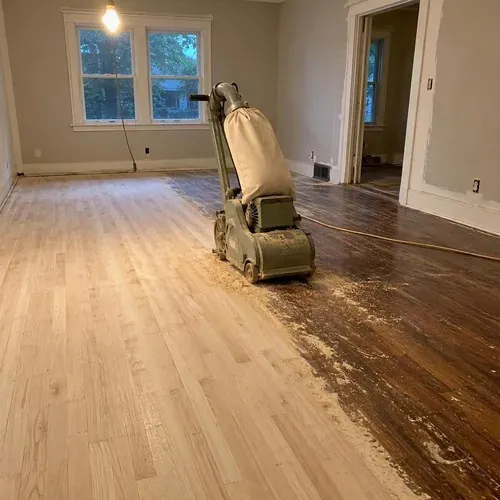
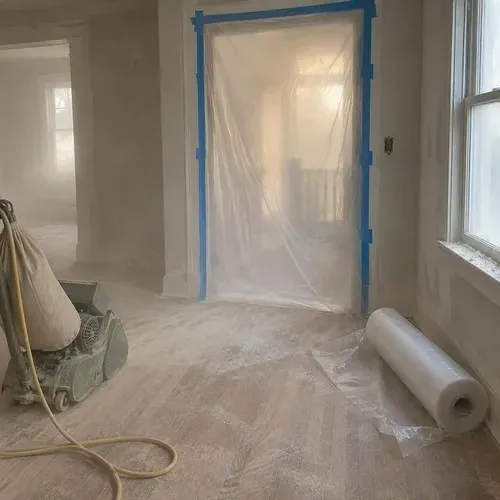
What we do is contain and extract. Our drum and edge sanders connect to high-efficiency vacuum extraction that pulls dust away at the sanding head, capturing the vast majority before it becomes airborne. We also seal doorways with plastic zip walls, cover floor registers and turn off forced-air systems while we sand.
The result is a light film in the work area rather than a coat of dust through the house. It is the difference most customers notice first.
Our process
Our Sanding and Refinishing Process
- 1
Inspection and a Test Sand
Before quoting, we inspect the floor for wear layer, loose boards, old repairs and the type of finish on it. Where the history is unclear, we do a small test sand in a closet or corner.
That shows us the true colour of the wood, whether there is wax that will gum up paper, and whether deep stains go right through. It avoids surprises on the first day.
- 2
Coarse, Medium and Fine Grit Passes
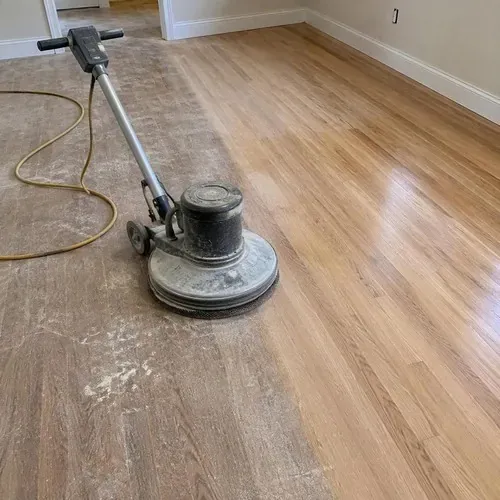
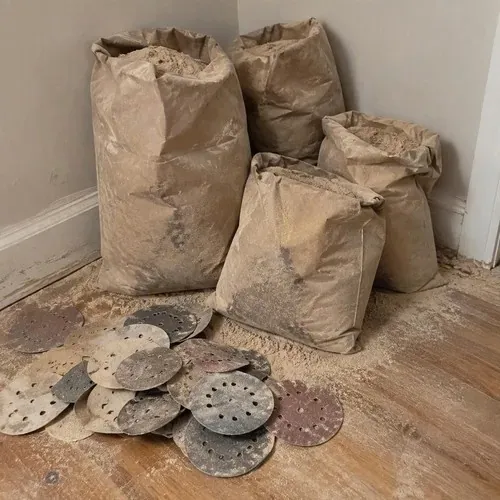
We sand in at least three passes, typically starting at 36 or 40 grit, moving to 60, then finishing at 80 to 100 grit. Each pass removes the scratches left by the one before.
Skipping a grit to save time leaves visible swirl marks and chatter that show under stain and raking light. After the drum sander, we screen the whole floor with a buffer to blend the field and edges.
- 3
Edging, Corners and Under Radiators
The drum sander can't reach the last few inches along walls, so we use an edger, then hand-scrape corners, around door casings and under cast-iron radiators common in older Guelph homes.
This is where cheap refinishing jobs show. Look for a band of darker, unsanded wood around the room edge. We take the extra hour so the edges match the middle.
- 4
Stain Sampling on Your Own Floor
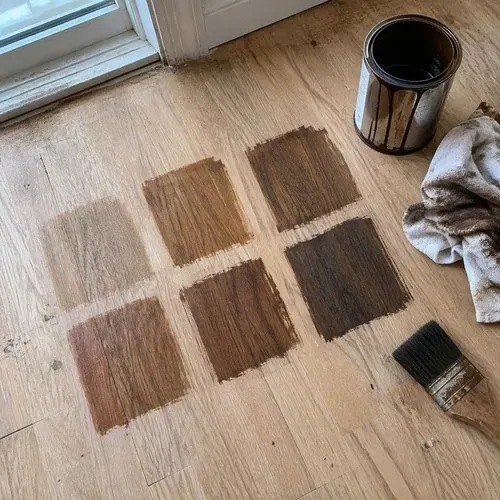
A stain on a showroom sample board never looks the same on your wood. Species, age and how the floor was sanded all change the colour.
So we apply two to four sample swatches directly on your sanded floor and let you choose in your own light. It is a small step that avoids a very expensive regret.
- 5
Sealing, Coating and Cure Time
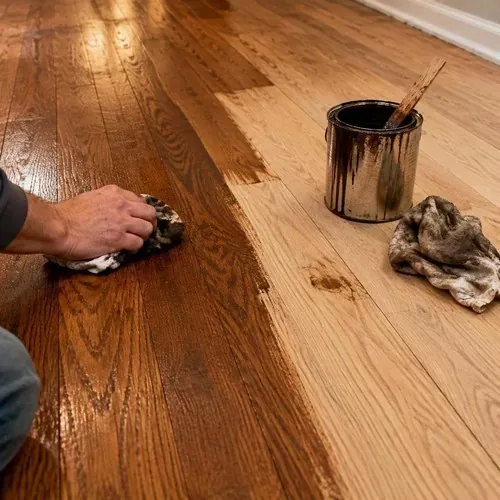
Most jobs get a sealer and two or three coats of finish. We usually recommend a commercial-grade water-based polyurethane: it dries clear, has low odour and cures faster than oil-based finishes. Oil-based finishes give a warmer amber tone and remain an option.
With water-based finishes you can usually walk on the floor in socks after 24 hours and return furniture after 48 to 72 hours. Hold off on area rugs for one to two weeks while the finish fully cures.
Can You Stay in the House While Floors Are Refinished?
Often yes, with planning. If we are refinishing one or two rooms with a water-based finish, most households stay home and simply avoid those rooms.
If the whole main floor is being done, or if it includes the kitchen and the only route to the stairs, staying is harder. Oil-based finishes also produce strong fumes, and we recommend people, especially children and pets, stay elsewhere during coating days.
We plan the sequence with you before starting, including whether to do the house in two phases so part of it stays usable.
What Refinishing Costs in Guelph
Typical 2026 Guelph pricing for a full sand and refinish:
| Service | Price |
|---|---|
| Sand and 3 coats, natural colour | $3.50 to $5.50 per sq ft |
| Sand, stain and 3 coats | $4.50 to $7 per sq ft |
| Screen and recoat (no sanding to bare wood) | $1.50 to $2.50 per sq ft |
| Stair treads | $50 to $100 per step |
What raises the price: stairs, heavy pet damage, floors previously sanded badly and needing extra passes, a dramatic stain change from dark to light, board replacement, and moving heavy furniture. Our hardwood floor refinishing cost guide goes deeper.
Floors We Can Bring Back
We refinish site-finished solid hardwood in oak, maple, birch, ash, hickory and pine. We refinish engineered floors with enough wear layer, parquet and block floors, and stairs, treads and railings, which are almost always quoted with a refinish.
We will not sand engineered floors with a wear layer too thin to survive it, or laminate and vinyl that only look like wood. We also won't sell a quick screen-and-recoat on prefinished factory floors, because new finish does not bond to their aluminium-oxide coating without a full sand. If yours is one of these, we will tell you at the assessment.
FAQ
Refinishing Questions
What is the typical cost to refinish hardwood floors in Ontario?
Most Ontario homeowners pay about $3.50 to $7 per square foot for a full sand and refinish, depending on stain, condition and access. A 300 square foot living room typically runs $1,050 to $2,100.
How long does it take to refinish 1000 square feet?
Usually three to five working days: one to two days of sanding, a day for stain if used, and a day or two for coats. Add 48 to 72 hours of cure time before furniture goes back.
Is refinishing messy or dusty?
With extraction on the sanders and plastic containment at doorways, most of the dust is captured before it spreads. Expect a light film in the work area, not throughout the house. Traditional sanding without extraction is much messier.
Will my floors look brand new?
Surface scratches, worn finish and light dents will disappear. Deep gouges, black water or pet stains and gaps between old boards may still show. We point these out at the assessment so your expectations match the result.
Can all hardwood floors be refinished?
No. Solid hardwood with enough wood above the tongue, yes. Engineered floors depend on wear-layer thickness, and floors that have been sanded many times may have nothing left to sand.
Will refinishing change the colour of my floors?
Only if you want it to. A clear finish brings out the natural colour of the fresh wood, which is usually lighter than the yellowed old finish. If you want a new colour, we sample stains on your actual floor.
How long before I can walk on them and move furniture back?
With a water-based finish, light foot traffic in socks after about 24 hours, furniture after 48 to 72 hours and rugs after one to two weeks. Oil-based finishes roughly double those times.
Free written quote
Book a Free Floor Assessment
We check wear layer, damage and finish, then give you an honest refinish-or-replace recommendation. Call 226-790-3755 or book online.
- 1
Call or send the form
Tell us the rooms, the floor you want and your timeline.
- 2
Free on-site measure
We measure, check the subfloor and take moisture readings.
- 3
Itemised written quote
Every line listed. No deposit needed to receive it.
Open Monday to Saturday 7am to 9pm, Sunday 9am to 5pm.